
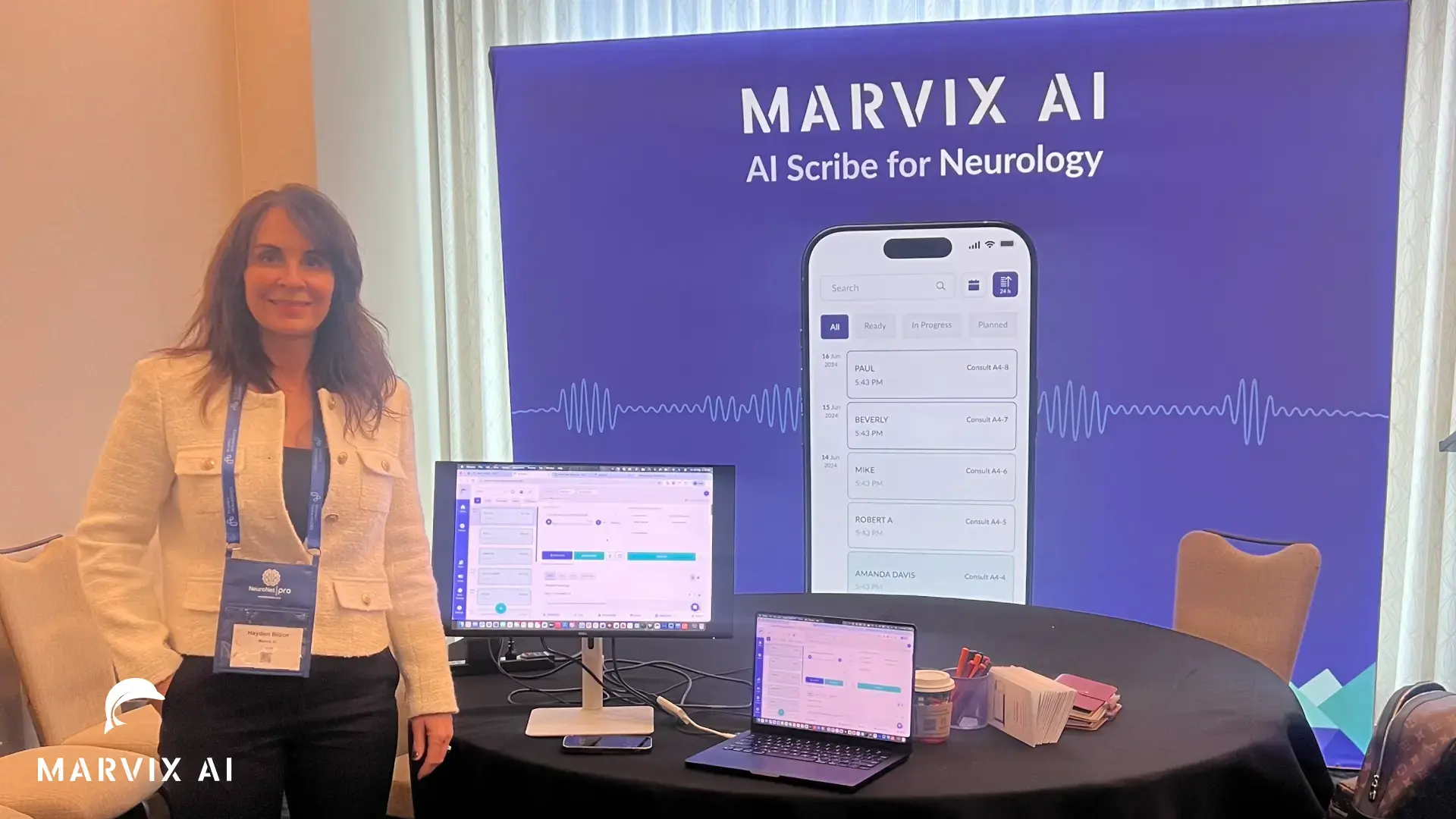

NeuroNet Pro Summit proved one thing: neurology doesn't need just smarter AI. It needs specialty-specific AI.
NeuroNet brought together neurology practice leaders to exchange insight, address operational challenges, and improve clinical workflows.
Neurology is defined by pattern recognition across time, but most documentation tools are built for single encounters. Seizure semiology, neurological exams, and longitudinal tracking require structured capture. The right documentation supports coding accuracy, protects revenue, and maintains clinical continuity.
Across sessions and conversations, one conclusion was clear: generic AI cannot support the complexity of neurology care.
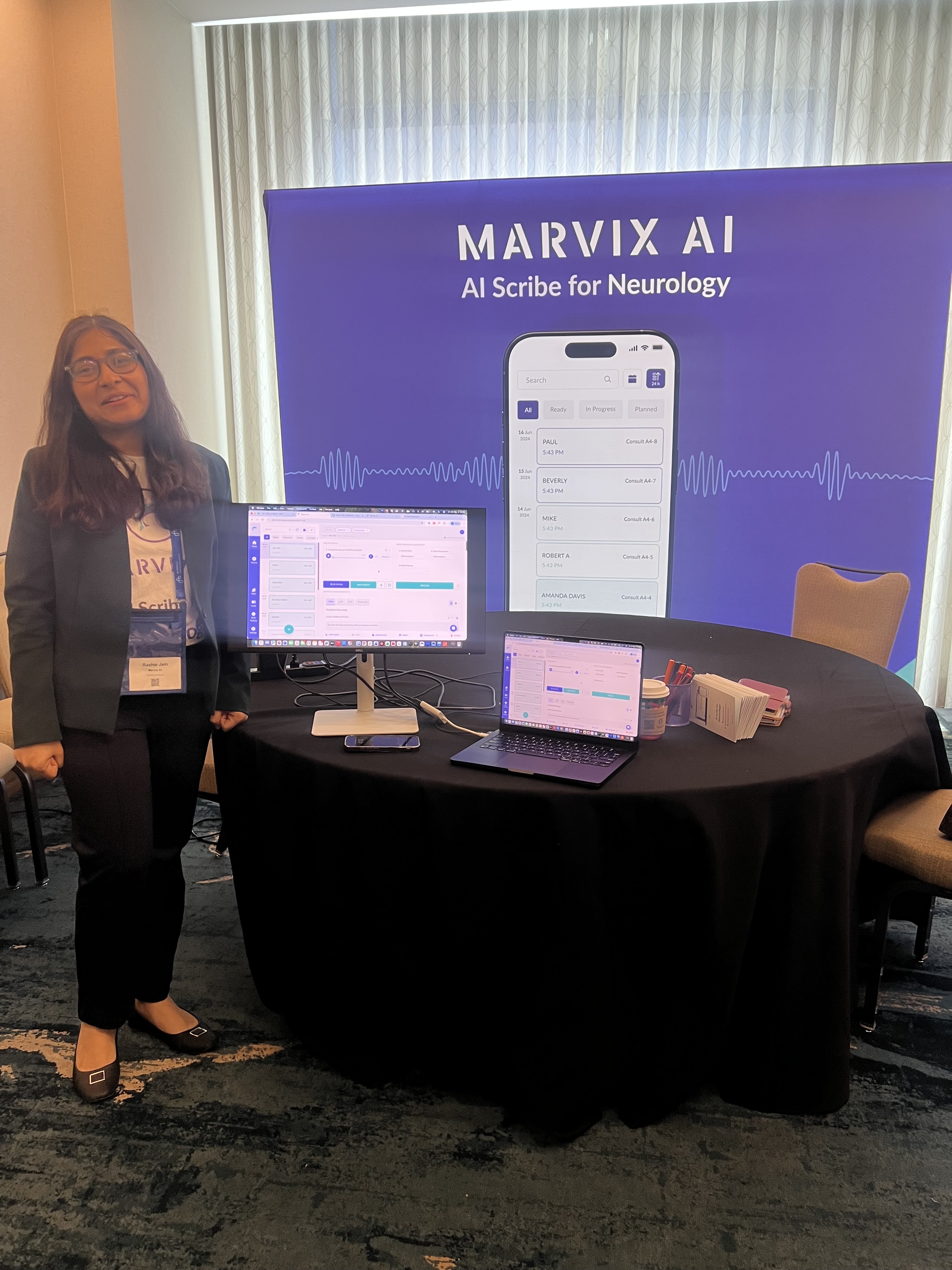
We opened Day 1 at Neuronet with two interesting sessions. Our co-founder Rashie Jain spoke on why generic AI tools fail neurology, and the AMA session with Amanda McFayden brought the operational perspective into focus.
In her session, Rashie Jain broke down why ambient AI built for primary care can't handle neurology's complexity. AI adoption in neurology has been slow with first-generation scribes. The challenge breaks down into three pieces: neurology consults are complex, neurology notes are complex, and no two neurologists document the same way. First-gen AI transcribes, but it doesn't reason or adapt.
The data proves it. Based on Marvix's internal analysis of 12,300 neurology consults and 11,237 primary care consults, neurology runs nearly 2x longer in every dimension: consult length, words spoken, note length, and HPI length.
The extremes tell the real story. Our longest consult ran 3.5 hours. The most words spoken in a single visit: 45,819. The longest note: 3,759 words.
Beyond length, neurologists need technical synthesis, not transcribed conversation. Generic AI outputs spoken language verbatim. Every subspecialty has hundreds of documentation preferences, from epileptologists to movement disorder specialists to headache specialists.
Marvix was built differently. It creates custom templates for every subspecialty and document type. It pulls in previous notes, diagnostic reports, lab results, and interval history to create a longitudinal patient recap. It carries forward previous diagnoses with technical assessments, adding medication regimens and treatment protocols through smart inferencing.
Marvix has changed my work-life balance significantly! It's the single best advancement in charting - EVER!
- Tammy Pesaresi, AGPCNP-C, Dent Neurologic Institute
The AMA session, hosted by Rashie Jain and Amanda McFayden from Dent Neurologic Institute, moved quickly after introductions. The room had questions.
The first one came up almost immediately:
How is Marvix actually built for neurology, and why does it work when other AI scribes don't?
The response highlighted what neurology-specific AI requires. Marvix creates custom templates for each provider and subspecialty. It pulls in previous notes, labs, and imaging to build a longitudinal patient recap. It carries forward technical assessments instead of starting from scratch every visit. It adapts to how neurology clinics actually document instead of forcing them to work around generic AI.
The second question was about integration.
How hard is this to set up? How long will it take?
Multiple people asked some version of this. The concern was whether implementation would slow down the practice or require heavy operational lift. Rashie explained that the Marvix team manages the entire integration process, setting up the system in 2 to 4 days with no additional cost. The process is structured and predictable, even for high volume clinics.
What stood out was how many people showed up because they'd already heard about Marvix from existing users. A lot of the AMA sign-ups came from word-of-mouth conversations at the event.
The conclusion from Day 1 was straightforward: neurology's complexity demands AI purpose-built for the specialty. Generic scribes miss too much, adapt too little, and can't handle the technical depth neurologists require. On Day 2, we moved from theory to practice with live demos across subspecialties.
Marvix is customizable, integrates with our EMR, and is genuinely user-friendly for specialists. Their team is responsive and meets us where we are.
With nearly 70 providers using Marvix, we're reducing provider burden and improving documentation quality, which has increased authorization approvals. We're thankful for this partnership.
- Amanda McFayden, Director of Clinical Operations, Dent Neurologic Institute
The questions kept coming. How does it handle overlapping speakers in a clinic? Can it track interval changes across visits? Can multiple providers collaborate on a single encounter?
The answer to all of them: yes, if the AI is purpose-built for neurology.
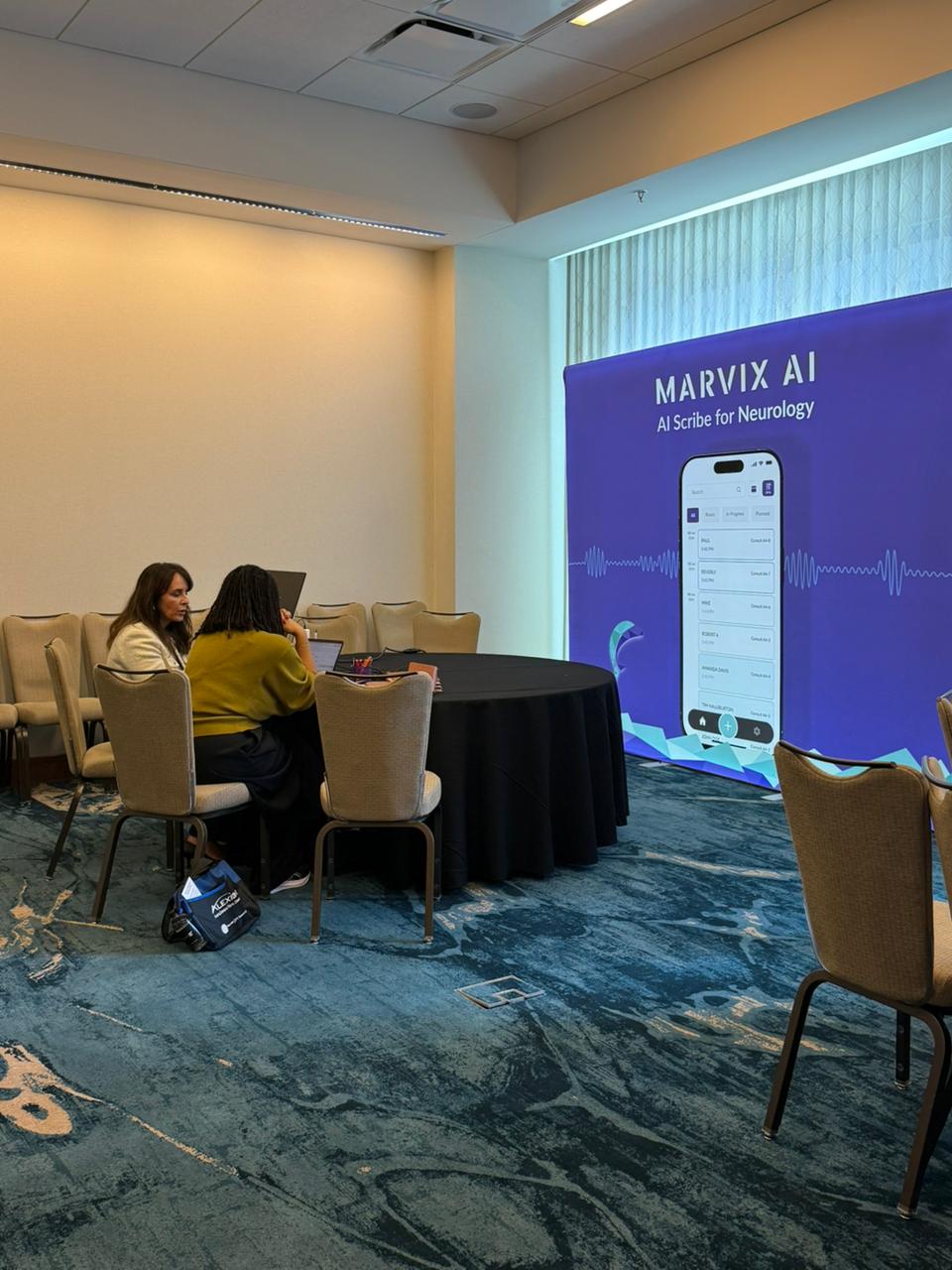
On Day 2, we ran live demos for epilepsy, movement disorders, neuro-oncology, headache medicine, pediatric neurology, and stroke. Each one reflected a real clinical scenario:
Every demo proved the same point: generic AI can't capture what it doesn't understand.
“Marvix AI has changed my life by giving me back time. I no longer spend weekends and evenings finishing notes or writing long letters. It's like having a personal scribe that knows me better than I know myself.
The accuracy, efficiency, and intuitive interface have streamlined my workflow beyond what I thought possible. No physician should go without it.
- Dr. Madeline Chadehumbe, CMO, Neurabilities
The feedback was clear: neurologists want AI that understands the complexity of their documentation, adapts to their workflows, and improves accuracy without adding steps. And that’s what Marvix was purpose-built to do.
Missed us at NeuroNet? See how Marvix captures your specialty's complexity in real time. Book a 30-day free demo here.
.png)


