

Every oncology visit builds on a complex clinical history. Beyond just recording today’s symptoms, providers are connecting diagnoses, staging, chemotherapy regimens, biomarker testing, imaging, treatment responses, side effects, referrals, and follow-up plans.
That complexity makes oncology one of the most documentation-intensive specialties in medicine, often extending documentation well beyond scheduled clinic hours.
Marvix AI was selected by Medical Oncology & Hematology Consultants (MOHC), part of The US Oncology Network (USON), to help reduce the documentation burden on oncology providers without compromising the quality and completeness of clinical documentation. To understand the impact of Marvix AI in day-to-day clinical practice, we tracked key operational and provider outcomes over a three-month period.
Before implementing Marvix AI, providers at MOHC faced three challenges:
Together, these baseline data showed that documentation was consuming valuable clinical time and extending providers' workdays, creating an opportunity to improve efficiency without compromising documentation quality.
Over the three-month period, providers generated 3,853 clinical notes using Marvix AI from more than 1,100 hours of recorded patient consultations.
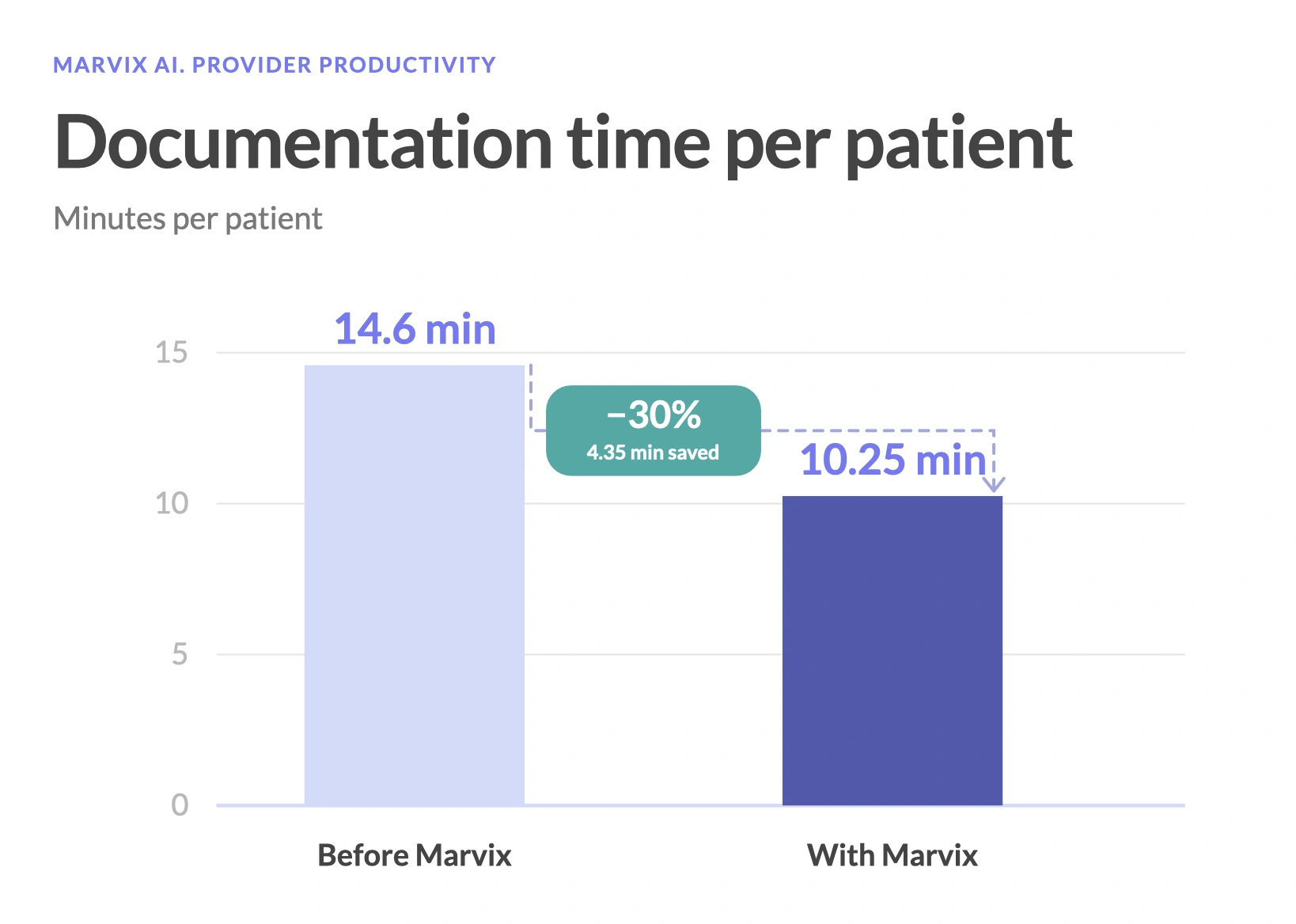
Marvix reduced the average time providers spent documenting each patient from 14.6 minutes to 10.25 minutes, saving 4.35 minutes per encounter. Across the three-month period, this translated into approximately 245 hours of documentation time saved. Based on an estimated provider value of $200 per clinical hour, this represented approximately $48,592 in estimated productivity gains and an estimated 7.8× return on investment after accounting for the cost of Marvix.
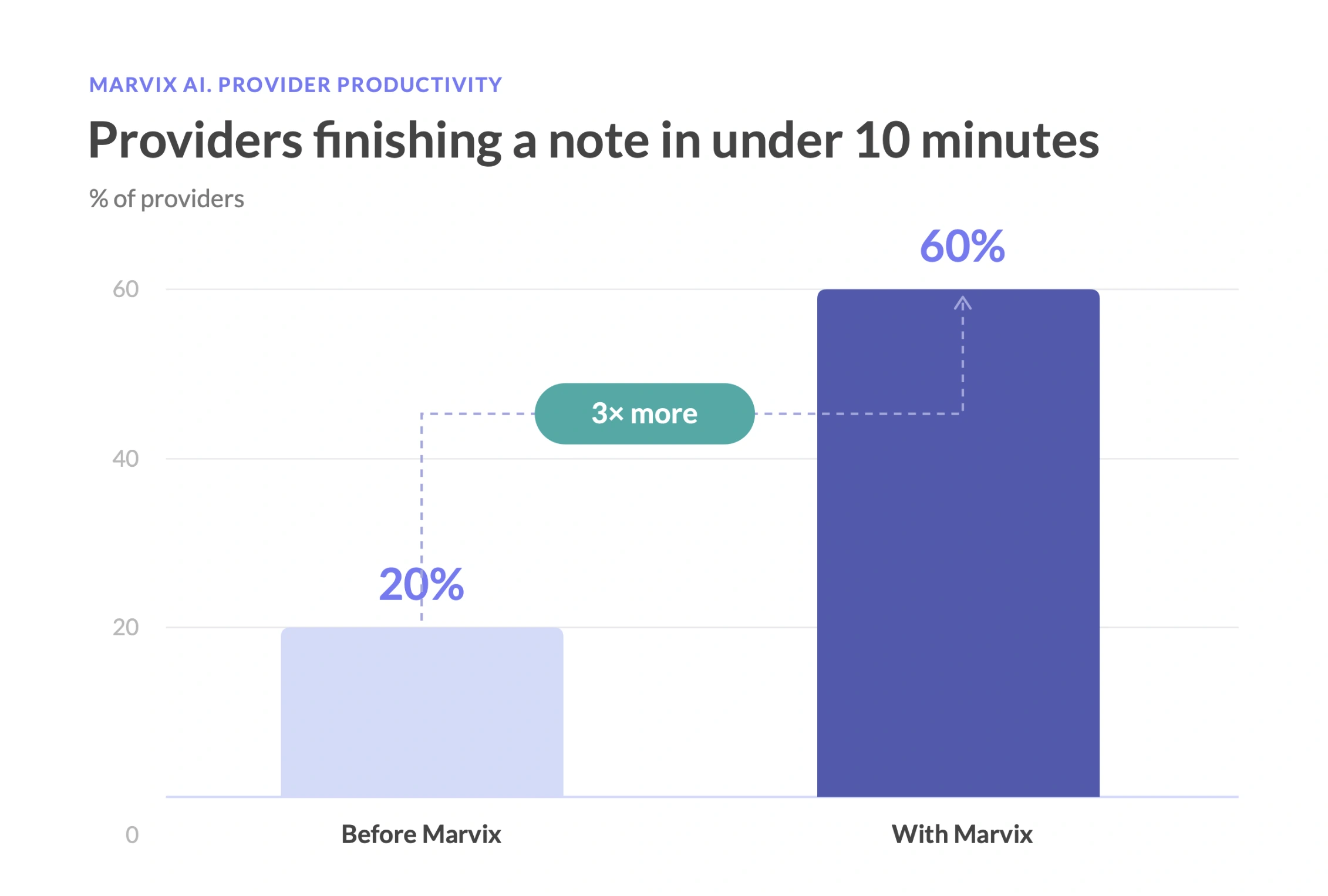
The improvement was reflected in provider behavior as well. Following implementation, 60% of providers completed documentation in under 10 minutes, compared with 20% at baseline.
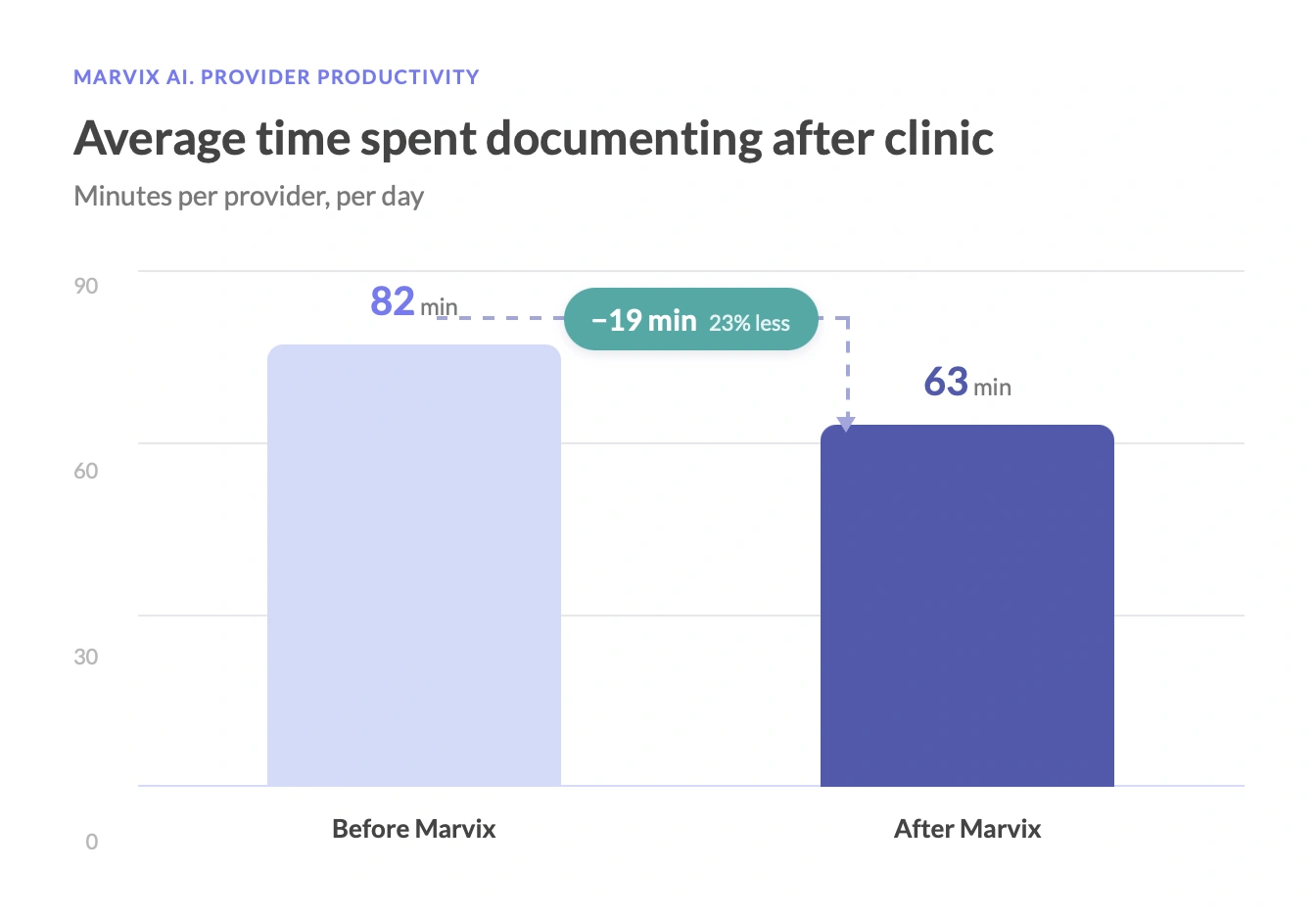
Average time spent documenting after clinic declined from 82 minutes to 63 minutes per day, returning 19 minutes to providers each day.
By the end of the 3-month period, 70% of providers were completing their documentation in less than an hour after the clinic.
“Marvix AI has significantly improved not only my workflow but work-life balance. I spend more time engaged with patients rather than on the computer. Burnout has significantly decreased. I no longer have the burden of worrying about staying up-to-date on notes and working outside of office hours on weekends. I have my personal life back again.”
— Nicole Schneider, APP
Provider sentiment aligned closely with the measured outcomes. 90% of the providers reported a reduction in documentation-related burnout, with 50% describing that reduction as significant. 70% said they were able to spend more time maintaining eye contact and engaging with patients during consultations
“Without a doubt, that time with the patient made both Jake and the patient feel better. Marvix has undoubtedly improved many aspects of care, not to mention quality of life and work-life balance.”
— Amy Brett, APP
Along with reducing documentation time, providers reported better documentation quality. 90% of the providers said the quality and completeness of their documentation improved, with overall satisfaction reaching 4.3 out of 5.
“It has decreased the amount of time I spend completing visit notes and has captured elements of the visit I might have otherwise forgotten or omitted from documentation.”
— Jodie Delesio, APP
Over three months, Marvix AI delivered measurable improvements in documentation efficiency, after-hours workload, documentation quality, and provider experience at Medical Oncology & Hematology Consultants (MOHC), part of The US Oncology Network (USON).
Unlike generic ambient documentation tools, Marvix AI is designed to support the complexity of specialty care documentation. These outcomes demonstrate Marvix’s ability to reduce administrative burden while maintaining the quality and completeness of clinical documentation.
.png)


