
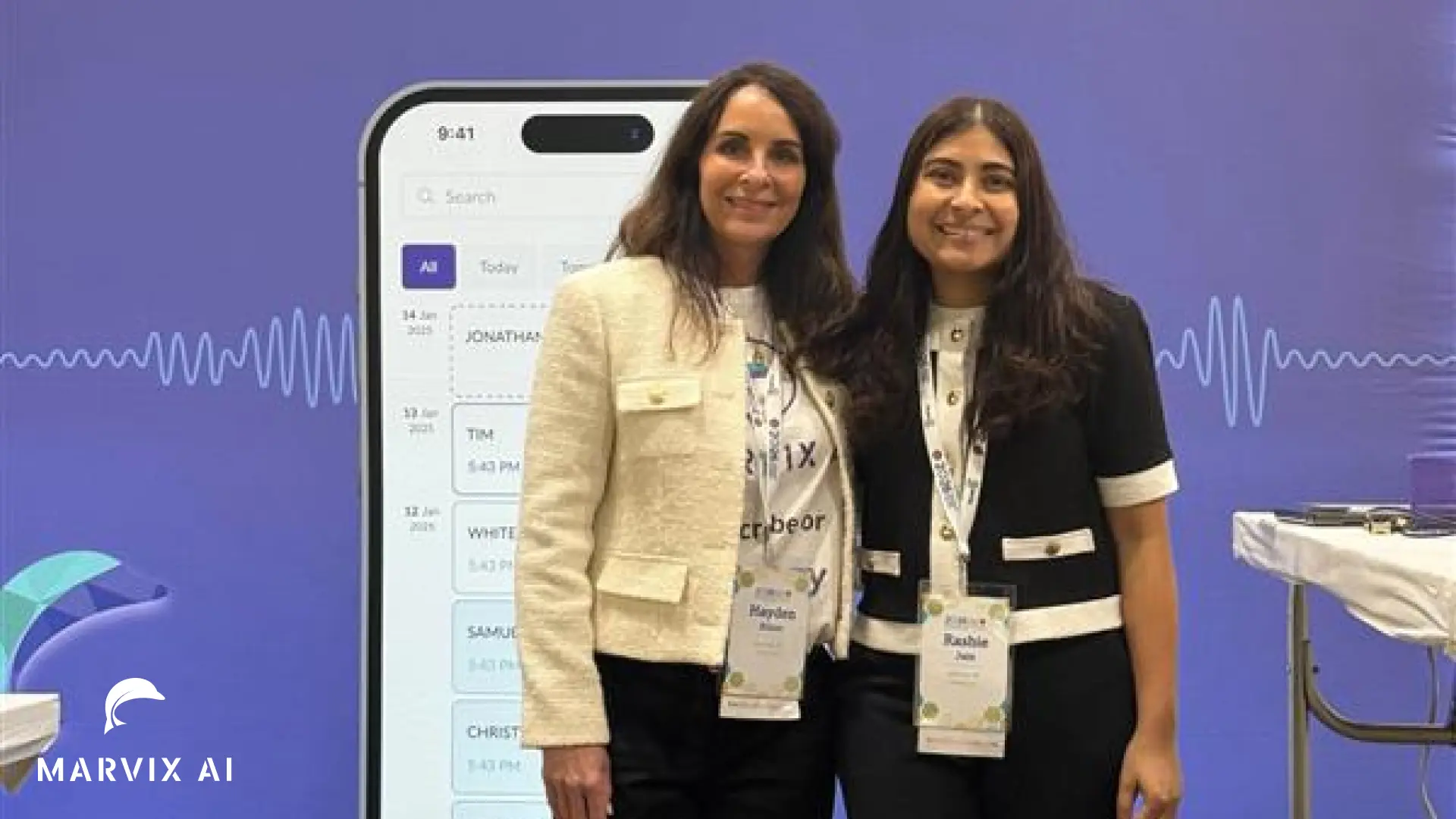

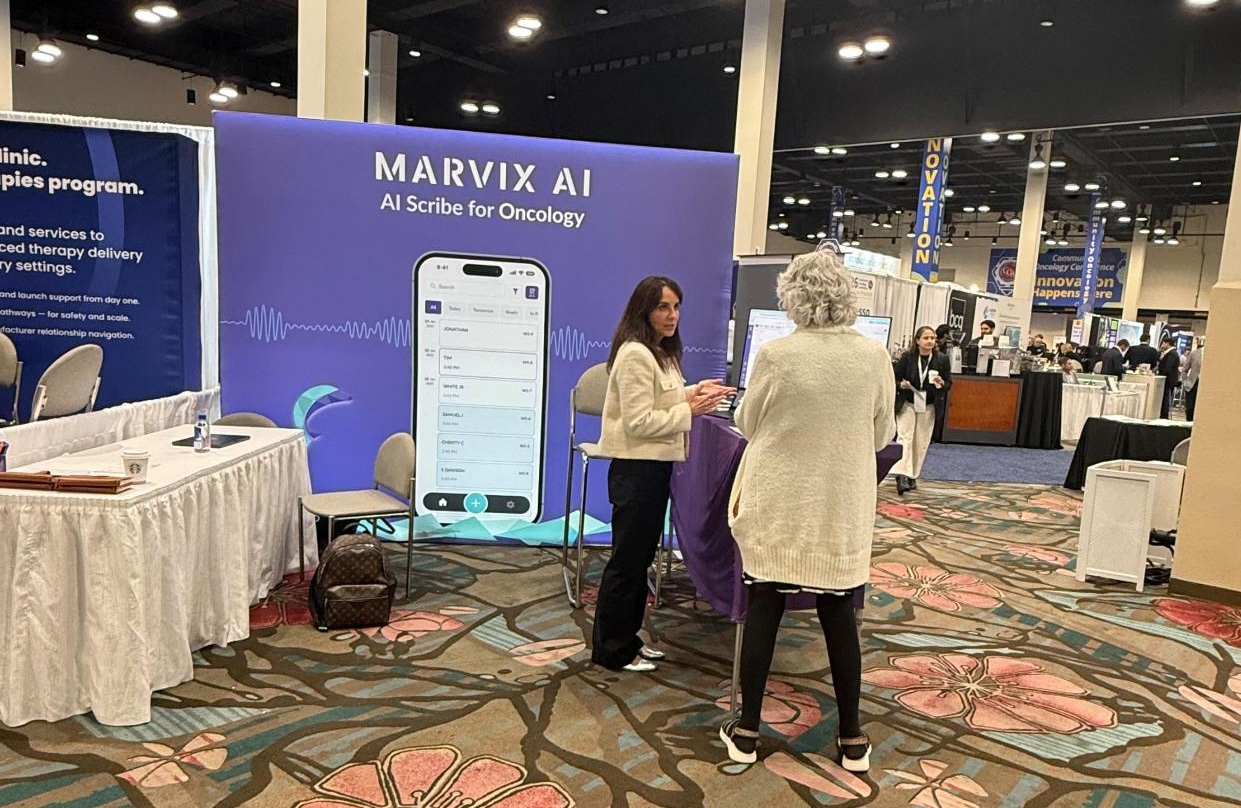
We did not expect COA to move the way it did. The oncologists who were there were very aware about AI scribes and use of AI in clinical documentation workflow. So when the Marvix booth stayed busy from the first morning and conversations kept going deep, we knew it was going to be another insightful and fruitful conference.
By the end of the conference, one moment in particular had stuck. An oncologist stopped, gave us thirty seconds of setup time, and then said: “Every AI demo looks great on a single visit. Show me a patient with metastatic breast cancer who’s been here for two years.” What happened next is what this post is about.
The oncologists we spoke with were specific about where things had gone wrong with tools they had tried before. Transcription was mostly fine. Where notes fell apart was in the clinical content underneath the transcription. When an oncologist is discussing a patient on FOLFOX with a KRAS G12C mutation and FDG-avid progression on their most recent PET, the note needs to reflect that with clinical precision intact.
However most of the oncologists’ experience had turned out to be a disappointing one. Regimen names came out phonetically right but misspelt. TNM staging, ECOG and Karnofsky performance scores were either missed or dropped into the wrong section of the note. The note required the kind of editing that put the documentation burden right back where it started.
One conversation at the booth shifted the tone of our entire day.
An oncologist stopped, listened to the setup for about thirty seconds, and then said: “Every AI demo looks great on a single visit. Show me a demo of a patient with metastatic breast cancer who’s been here for two years, changed regimens three times, had multiple scans, outside records, and a hospitalization.”
And so we ran it. One of our team members played the patient. She donned her hat and started the consultation.
She was not testing note generation. She was testing whether Marvix could understand longitudinal care, whether it could hold together two years of clinical history across regimen changes, imaging, outside records, and an inpatient stay, and make sense of it as a coherent patient journey rather than a pile of discrete encounters.
Within a minute of processing the recording, the output pulled information from prior notes, pathology reports, imaging summaries, discharge records, and external documents. It produced a concise longitudinal history. And the clinical note captured that full history in context, and woven it into the current visit.
Her reaction: “I expected it to be like another scribe I had tried and stopped using. What surprised me was how quickly it reconstructed the patient’s entire cancer journey without me opening ten different notes.”
That is what Patient Recap is built to do. It pulls prior notes, labs, imaging reports, and other clinical documents from the EHR and organizes everything into a structured summary before the visit starts, so the physician walks in already oriented. For an oncologist whose returning patients carry months or years of fragmented history across multiple formats, that changes how the follow-up consultation runs. The oncologists at COA understood the difference immediately, because they had felt the cost of the alternative every time a returning patient came.
Most radiation oncologists who dropped by our booth, shared one underlying problem that they live with every visit. The note structure that works for a medical oncologist does not map onto what a radiation oncologist actually needs to document. Imaging review, dose and fractionation, target volume definitions, tumor response, toxicity management - These are not sections you can improvise from a generic template. But when a scribe produces something generic and leaves the physician to restructure it, that editing does not feel like a small inconvenience. And if it happens on every single visit, on every single patient, it keeps adding up.
The oncologists asking at COA had been through exactly that. They were not asking whether AI scribes could transcribe. They were asking whether there was a tool that actually understood what their notes are supposed to look like. Running a live radiation oncology scenario at the booth answered that more directly than any description could have.
The oncologists at COA were past the point of evaluating whether AI documentation works in principle. They were evaluating whether a tool existed with the depth oncology actually requires.
The challenge one physician put to us: "Show me a real patient, two years of history, three regimen changes, scans, outside records, a hospitalization", is not a stress test for a conference demo. It is probably a regular day in oncology practice.
Marvix passed it. And for the oncologists at COA who had already been through a round of tools that did not, that was the difference.
Want to see how Marvix handles oncology documentation? Book your 30-day free trial, integrated with your EHR from day one.
.png)


